
Criminal Court Cases in Kalkaska County
Kalkaska County divides criminal jurisdiction between 87-B District Court and the 46th Circuit Court. District Court hears misdemeanors, ordinance matters, and civil infractions. It also handles the first stages of every local felony, including arraignment, bond, the probable-cause conference, and the preliminary examination. When the court finds probable cause, or the examination is waived, the felony is “bound over,” meaning transferred to Circuit Court for the trial-level case.
The County Clerk serves as clerk of the 46th Circuit Court and keeps felony files after bindover. Family Division handles juvenile and family matters, where access may be restricted, while Probate Division is not an ordinary criminal-case channel. All four divisions are listed at 605 North Birch Street in Kalkaska, but they do not hold the same records. Call District Court at 231-258-9031 for a misdemeanor or the early felony docket. Call the Circuit Clerk at 231-258-3349 once a felony has moved.
Follow Kalkaska Felonies to Circuit Court
The most useful local search method follows a felony instead of treating it as one static file. Start with the District Court case number and register of actions. Look for a preliminary examination, a waiver, or a bindover entry. A felony that moves creates a Circuit Court record with its own trial-level filings. The complaint starts the District Court prosecution; the information is the charging document normally filed in Circuit Court after bindover.
The official 46th Circuit Court website identifies the court serving Kalkaska County and provides the path to its divisions and services.
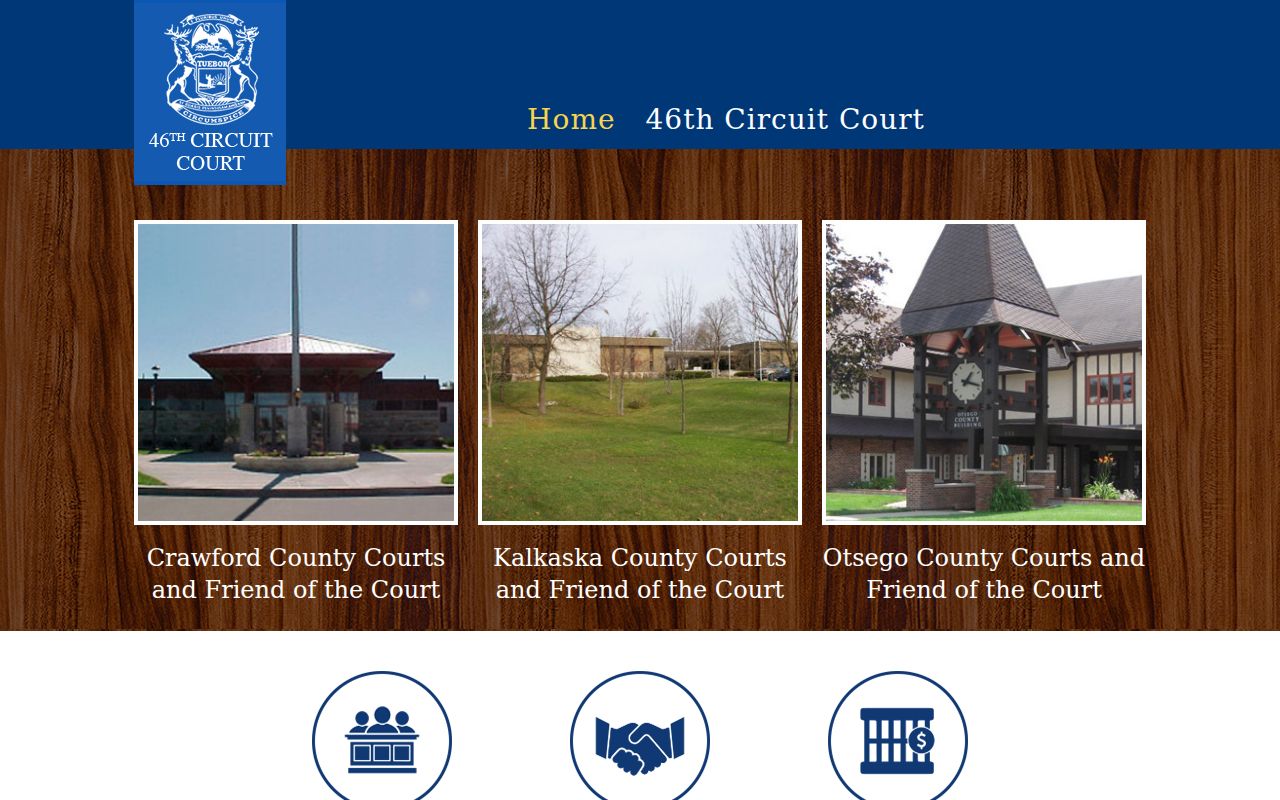
That Circuit Court channel matters when a District Court result shows movement rather than a final felony outcome. Ask the clerk for the Circuit register of actions, felony information, judgment of sentence, and any public orders needed to understand the disposition. A misdemeanor does not make this transfer and remains in 87-B District Court.
Kalkaska County Case Record Searches
MiCOURT Case Search is Michigan’s multi-court public portal, but users must select the Kalkaska 87-B court rather than assume a statewide result is complete. Search by party details or a known case number. Online entries can show a case before other state records update, and downloadable documents vary. Use the docket to locate the case, then use the clerk for the official record.
- Open the 87-B District Court MiCOURT entry and confirm that Kalkaska is the selected court.
- Choose the available party-name or case-number mode and enter the most precise information known.
- Compare the case number, filing date, case type, charge, and status so a similar name is not mistaken for the right person.
- Read the register-of-actions events for hearings, disposition, and any felony bindover to the 46th Circuit Court.
- Contact the proper clerk for a public copy, certified judgment, or an older paper file and ask about the current cost and delivery method.
The interface may change, and not every field appears in every search mode. These are the core identifiers documented for a typical public case search or file.
| Field Label | Type | Required | Use |
|---|---|---|---|
| Party name | Text | Mode dependent | Find cases associated with a displayed party name |
| Case number | Text | For number mode | Open a known District Court case directly |
| Court | Selection | Yes | Confirm the result comes from Kalkaska 87-B |
| Case type | Display/filter | No | Separate criminal, ordinance, and other matters |
| Filing date | Date | No | Distinguish similar names and place events in order |
Kalkaska Court Records Control
MiCOURT is informational. The clerk’s signed or certified court document controls when the web entry and paper record differ. A register of actions is the dated list of filings and events, not the full set of pleadings. It can show when a complaint was filed, a hearing occurred, bond changed, a plea was entered, or judgment issued. It usually does not supply the police narrative or guarantee that each underlying document can be downloaded.
For a District Court file, call 87-B District Court at 231-258-9031, fax 231-258-2424, or visit the counter. For a felony after bindover, contact the 46th Circuit Court Clerk at 231-258-3349, fax 231-258-3337, or email dhill@kalkaskacourt.org. Both counters are listed at 605 North Birch Street. The general court publishes public hours of 8:00 a.m. to 4:30 p.m. on weekdays, while the County Clerk lists 8:00 a.m. to 5:00 p.m. Because those hours differ, call before a late-afternoon visit. The courthouse also has an outdoor drop box, but a transaction deposited after 4:00 p.m. or on a closed day is processed the next business day.
What a Criminal Case File Contains
Kalkaska County criminal case records combine identifiers, filed allegations, court events, and the result. The best document depends on the question. A complaint or felony information states the charge, but it does not prove guilt. The register of actions supplies the timeline. A judgment gives the formal result, while the sentencing entry records the consequence imposed after a conviction.
| Case Number & Court | Identifies the docket and whether 87-B District Court or 46th Circuit Court holds that stage. |
|---|---|
| Charging Document | The complaint begins the District case; a felony information follows bindover or waiver in Circuit Court. |
| Docket Entries | The register of actions lists filings, hearings, orders, pleas, and other events by date. |
| Hearing Dates | May show arraignment, probable-cause conference, preliminary examination, pretrial events, trial, and sentencing. |
| Disposition & Judgment | Records dismissal, acquittal, guilty or no-contest plea, verdict, and the signed outcome. |
| Sentence & Conditions | May identify confinement, probation, restitution, costs, and other terms imposed by the court. |
Bond, judge, counsel, financial entries, statutes, and party display may also appear. Protected Social Security numbers, financial-account data, victim or minor information, and nonpublic records are withheld or redacted. A dismissal ends the filed charge without a conviction on that charge, but it does not automatically erase a separate arrest report or booking record.
Kalkaska County Bond Case Entries
Local guidance recognizes four bond forms: personal recognizance, cash, ten-percent, and surety. Recognizance permits release on a promise to appear without cash security. A surety uses an authorized third-party bonding mechanism. The docket may record the type, amount, a later change, or a failure to comply, but the current court or jail procedure controls what must be posted.
The 46th Circuit Court bail and bond page explains the local bond categories and states that bail may be posted at the county jail.
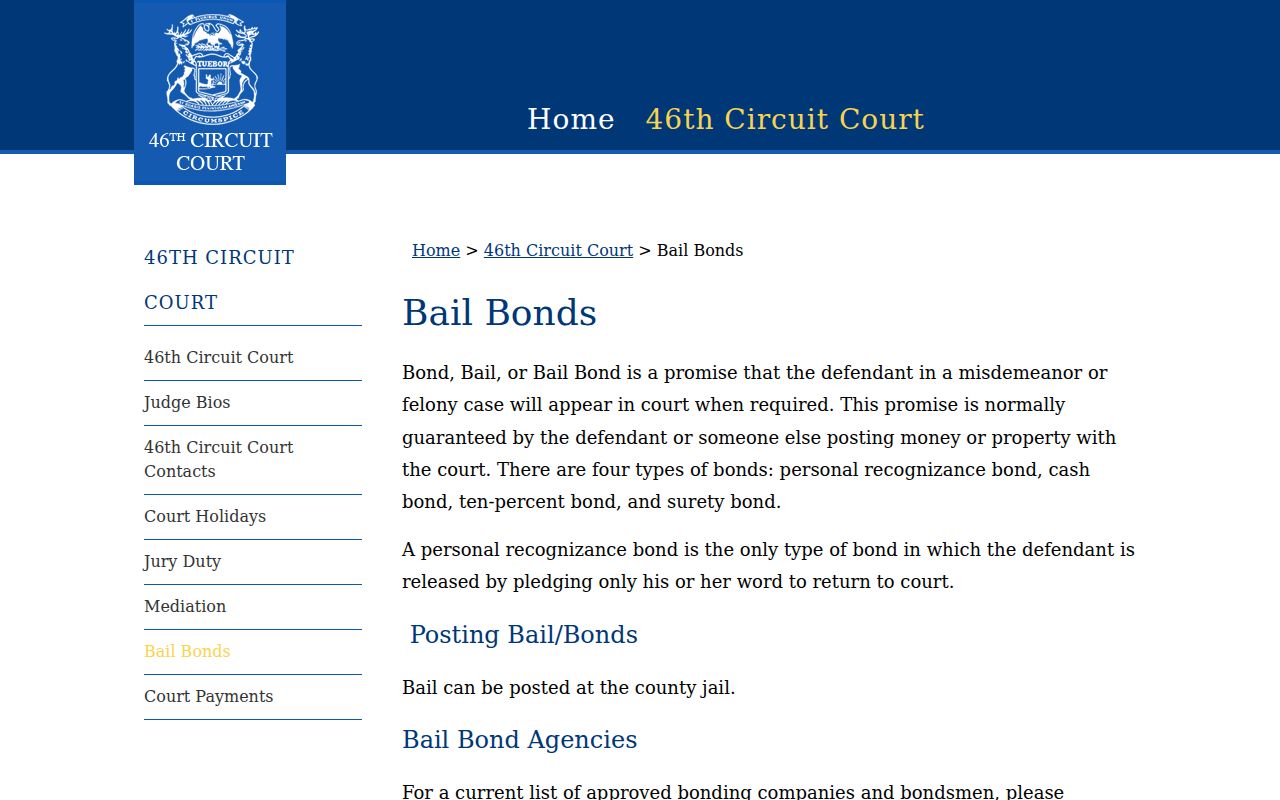
Use that source to interpret the label, then call the relevant court or the Kalkaska County jail for the exact amount, accepted payment, and current posting process. A web docket may not reflect a recent bond order at once. The signed order is the safer record when timing matters.
Criminal Case Stages in Kalkaska County
A local criminal case begins when the prosecutor authorizes a charge, not merely when an agency makes an arrest. District Court conducts arraignment, states the charge and rights, addresses counsel and bond, and schedules the next event. In a felony, the probable-cause conference precedes the preliminary examination. At that examination the prosecutor must show enough cause for the felony to move to Circuit Court, unless the hearing is waived.
Case flow: Charges Filed › Arraignment › Pretrial › Plea or Trial › Disposition › Sentencing
That short line describes the broad path, but a Kalkaska felony crosses courts after its early District stages. Motions, adjournments, amended charges, or a dismissal may alter the sequence. A plea is the accused person’s formal response. A disposition is the outcome of a case or charge. Sentencing follows a conviction by plea or verdict; an acquittal is a not-guilty trial verdict and does not lead to a criminal sentence on that charge.
Kalkaska County Cases Since 1871
The County Clerk reports that records begin in 1871. That long span makes the clerk a key channel for family history, historical research, and cases that do not have a digitized public document. Older material may require a mail or in-person request instead of an online lookup. Supply the name, approximate year, court, and any case number already known so staff can identify the requested file.
Ask whether the record is available for inspection, whether copies can be sent by mail, and whether certification is offered. Official research did not locate a published plain-copy or certified-copy fee for these Kalkaska criminal files, so no fixed price should be assumed. Reproduction charges may apply. The clerk can give the current amount, acceptable payment method, and delivery options before a request is sent.
Access Rules for Case Records
Michigan court files do not use the county FOIA route. The judiciary is excluded from the Michigan Freedom of Information Act’s definition of a public body. Public access instead follows Michigan Court Rule 8.119. Under that rule, public case records may be inspected and copied unless a law, court rule, or order restricts them. A court may charge for reproduction, but not merely for access, retrieval, or inspection.
Juvenile matters, protected victim or minor information, personal identifiers, and records made nonpublic by law or court order do not appear like an ordinary adult file. Online redaction can also be broader than the public paper record. When a known case does not appear, ask the clerk whether the search is incomplete, the matter moved to another court, or access is restricted. Court staff cannot release a sealed or nonpublic file simply because a requester knows it exists.
Use the record with care. An arrest is not a conviction, filed allegations can change, and online status may lag behind a signed order. Verify the outcome with the custodian before relying on a docket entry.
Federal Cases Outside Kalkaska MiCOURT
Kalkaska County lies within the U.S. District Court for the Western District of Michigan. Federal prosecutions do not appear in Kalkaska’s MiCOURT docket, and the county clerks do not maintain those federal files. Search PACER after registration for a federal docket or filed document. PACER’s published 2026 price is ten cents per page, with a general three-dollar cap on a case-specific document or report and fee waiver when quarterly use is thirty dollars or less. Rates can change, so check the current schedule before ordering.
The official PACER access site shows the federal account and court-record route.
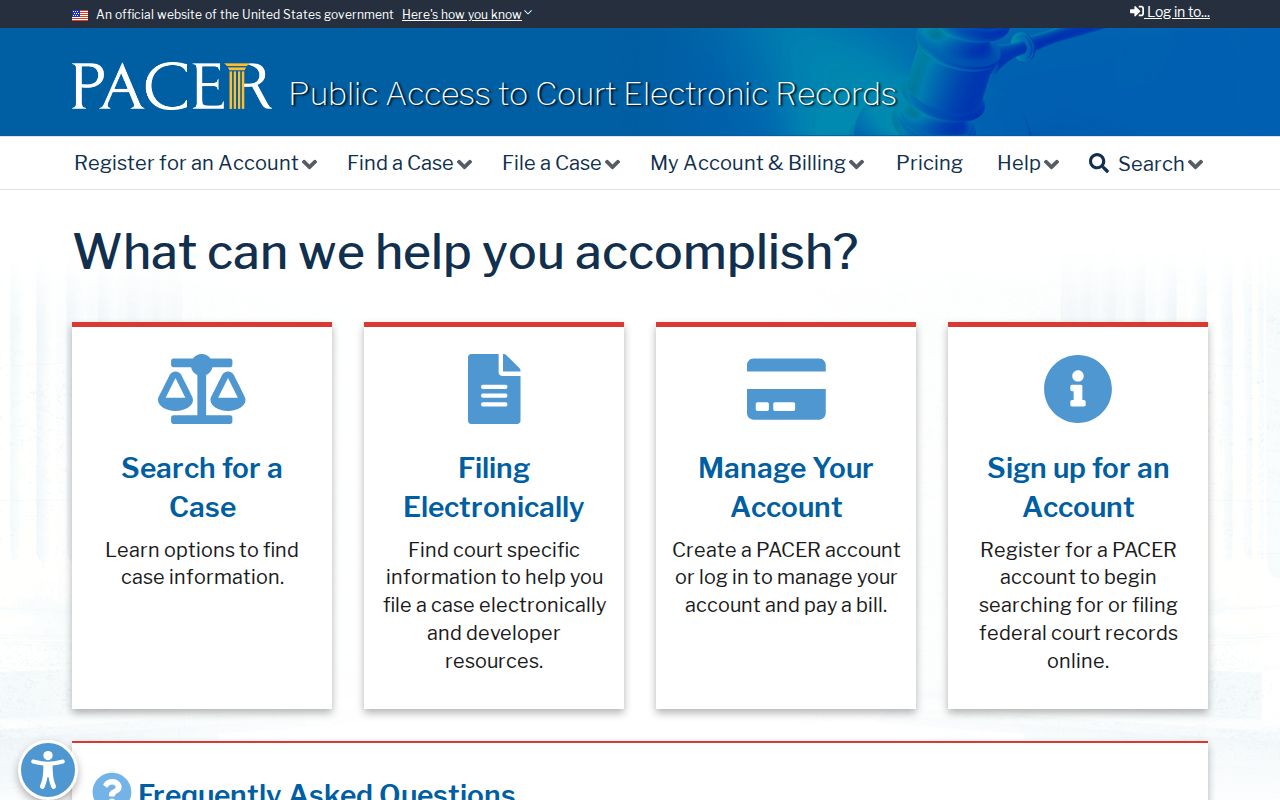
This is a separate jurisdictional layer, not a substitute for 87-B District Court or the 46th Circuit Court. A complete search for a known prosecution starts by identifying whether the charge was county, state, or federal, then contacting the office that created and maintains that case file.